I was a guest on the "That's Golf" Radio Show with host Jim Apfelbaum. Click on the link to listen.
That's Golf with Apfelbaum 3/30
I am on starting at minute number 18:10 into the show.

Garry Rippy Golf offers golf lessons, golf coaching, golf instruction, golf classes and golf schools in Austin, TX. This blog contains golf instruction articles, golf tips and golf instruction videos by Garry Rippy, PGA.
Tuesday, April 8, 2014

Monday, February 17, 2014
#Snakes!
Snakes alive! For all my Texas readers, the warm February weather has awakened our slithery friends. This coral snake was located at River Place Country Club (Austin, TX) on hole #2.
Remember this Texas expression to identify this very poisonous coral snake...red touches yellow, kill a fellow...red touches black, friend of Jack. As you can see, the red and yellow bands are touching.
Just a friendly reminder, when you go looking for a stray golf ball, always carry a club. Do not reach into high grass, bushes or dead timber with your bare hand! Coral snakes are very colorful, so they are more easily spotted, but rattlesnakes and copperheads blend in to their surroundings. Don't forget about the cotton mouth water moccasin too. They are usually laying around lakes and creeks and can be aggressive.
My rule of thumb is "if you can't see your feet, you are in too deep". Take your drop and move on. The U.S.G.A. Rules of Golf allow you to take a drop away from dangerous situations penalty free.
Following is a link to help you identify our Texas poisonous snakes.
http://www.texaspoison.com/snakes.asp
Remember this Texas expression to identify this very poisonous coral snake...red touches yellow, kill a fellow...red touches black, friend of Jack. As you can see, the red and yellow bands are touching.
 |
"I am poisonous"! |
My rule of thumb is "if you can't see your feet, you are in too deep". Take your drop and move on. The U.S.G.A. Rules of Golf allow you to take a drop away from dangerous situations penalty free.
Following is a link to help you identify our Texas poisonous snakes.
http://www.texaspoison.com/snakes.asp
Sunday, February 2, 2014
How Well do you Visualize your Golf Shots?
 |
| "Goal Post" from the Austin Junior Golf Academy, Hancock Golf Course |
Let me explain...
I was an instructor at a golf clinic about 6 years ago and Jackie Burke was the featured speaker. If you don't know about Jackie Burke, I have included links at the bottom of the page which will direct you to articles about Jackie and you will get the idea. He won The Masters in 1956 as well as 16 events on the PGA TOUR. In addition, many PGA TOUR players have sought out his expert wisdom and advice including Phil Mickelson, Hal Sutton, Steve Elkington just to name a few. When Jackie speaks, the pro's listen!
During the clinic, Jackie was discussing club selection and alignment. This is an excerpt from the Golf Digest article about club selection:

As far as aiming, this is what Jackie had to say during the clinic, "man, as far as lining up to the target, I just imagined a goal post between me and the target and I just hit it through the goal post"!
Now you know what a goal post has to do with golf. It's all about visualizing your golf shot before you hit it. Sometimes all of us get caught up in swing mechanics and forget the object of the game is to play from point A to point B. We need to be thinking more of the target and less about the swing during a round of golf. By imagining you are hitting through a goal post, you are projecting your thoughts to the target. In particular, if you are faced with a difficult or scary shot over a hazard, the goal post would gather most of your attention and you wouldn't worry as much about the hazard.
In the Austin Junior Golf Academy we use "Goal Posts" as one of the hitting stations for the juniors. They have so much fun hitting their shots through the goal post and they are learning to visualize at a young age.
In addition to "Goal Posts", we have a hitting station called "Picture This". At this station, the juniors (using soft golf balls) are about 5 yards from the obstacle and they have to hit through the window. Focus is on the target which is the tree in the middle of the window.
 | |||
| "Picture This" from the Austin Junior Golf Academy, Hancock Golf Course |

Following is another excerpt from the Jackie Burke Golf Digest article:

Jackie Burke Articles
http://www.golfdigest.com/magazine/myshot_gd0405
You may have to right click on this link and then Open Link in New Window
http://www.augusta.com/stories/2011/04/04/mas_611456.shtml
Tuesday, January 28, 2014
Pilot your Golf Swing for Better Golf Shots
I am always trying to think of creative ways to help golfers better understand the golf swing. Following is an idea or picture which will help you visualize and feel a correct club head path for straighter and more solid golf shots!
I am comparing the club head path to that of a plane practicing "touch and go" landings on an aircraft carrier. The plane heads in from the left side of the carrier, lines up with the runway (yellow arrow), makes a brief touch down and then takes off again and circles back to the left to repeat the process.

As you can see in my driver downswing, I am coming sightly from the inside or left of the target line before traveling down the "runway" toward the target. As my body rotates, the club follows that rotation and begins to swing left around my body to the finish. Remember there are no straight lines in the golf swing...everything is a circle.


The aircraft is following the same principle. The YELLOW arrow indicates the aircraft is coming in from slightly left of the carrier and then is lining up for a successful landing on the runway. If the aircraft followed the LOWER RED arrow, the path would be too much from the left or inside the correct path and the plane would not make it to the runway. In the golf swing, we call this being too "shallow" and will cause you to either top the ball or hit way behind the ball. In addition, this inside path could cause you to hit shots way out to the right, or you would flip the club with your hands and hook the ball.
If the aircraft followed the UPPER RED line, that would be too steep of an approach and would not lead to a successful landing.
In the golf swing, a path which is too steep and coming from the outside or right of the target line could cause you to hit behind the ball (or deep divots), hit pop ups with your woods, and more than likely hit slices to the right or pulls to the left. This path is commonly referred to as being "over the top".

Above is a view of the club starting to swing back to the left of the target line after it leaves the runway. It is the same as the flight path as the plane coming off the deck and beginning to circle around to repeat the process.
The bottom line for your golf swing is you want a path which comes slightly from the inside, down the target line and then back to the inside of the target line to the finish.
In the picture above I am demonstrating a drill in which I placed a 3' long, 2x4 board about three inches to the left of my golf ball. I placed the ball about 4 inches from the front of the board. My goal is to make small swings and not strike the board. If I come too much from the inside I would strike the board and not the ball (OUCH!). If I come "over the top" I would clip the board on my follow through, again very body jarring! I recommend using an alignment rod in place of the board until you get very proficient at not striking the rod on the downswing. And again, make 1/2 swings to get started.
By the way, I really admire and appreciate the skilled and brave pilots who put their life on the line on a daily basis!
I am comparing the club head path to that of a plane practicing "touch and go" landings on an aircraft carrier. The plane heads in from the left side of the carrier, lines up with the runway (yellow arrow), makes a brief touch down and then takes off again and circles back to the left to repeat the process.
The aircraft is following the same principle. The YELLOW arrow indicates the aircraft is coming in from slightly left of the carrier and then is lining up for a successful landing on the runway. If the aircraft followed the LOWER RED arrow, the path would be too much from the left or inside the correct path and the plane would not make it to the runway. In the golf swing, we call this being too "shallow" and will cause you to either top the ball or hit way behind the ball. In addition, this inside path could cause you to hit shots way out to the right, or you would flip the club with your hands and hook the ball.
If the aircraft followed the UPPER RED line, that would be too steep of an approach and would not lead to a successful landing.
 |
| Nose first! |
Above is a view of the club starting to swing back to the left of the target line after it leaves the runway. It is the same as the flight path as the plane coming off the deck and beginning to circle around to repeat the process.
The bottom line for your golf swing is you want a path which comes slightly from the inside, down the target line and then back to the inside of the target line to the finish.
 |
| Drill to improve club head path |
In the picture above I am demonstrating a drill in which I placed a 3' long, 2x4 board about three inches to the left of my golf ball. I placed the ball about 4 inches from the front of the board. My goal is to make small swings and not strike the board. If I come too much from the inside I would strike the board and not the ball (OUCH!). If I come "over the top" I would clip the board on my follow through, again very body jarring! I recommend using an alignment rod in place of the board until you get very proficient at not striking the rod on the downswing. And again, make 1/2 swings to get started.
By the way, I really admire and appreciate the skilled and brave pilots who put their life on the line on a daily basis!
Friday, January 24, 2014
Short Game Secrets
Terry Dill, retired PGA TOUR and Champions TOUR player (and winner), developed an intricate short game system which covers everything from chipping, pitching, bunker shots and full wedges.
I helped him put all of this information into writing after peering through pages and pages of notes he had taken over his professional career. The end result is a very comprehensive short game program in which he was so kind to share with me so that I can now share with my students.
This is a video which briefly explains some of the details of his ideas about the short game.
I have incorporated this information into all of the short game improvement programs I offer.
A great short game will improve your score and any short game work you put in will help your full swing as well.
Enjoy the video!
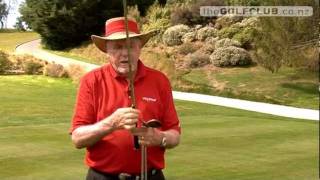
I helped him put all of this information into writing after peering through pages and pages of notes he had taken over his professional career. The end result is a very comprehensive short game program in which he was so kind to share with me so that I can now share with my students.
This is a video which briefly explains some of the details of his ideas about the short game.
I have incorporated this information into all of the short game improvement programs I offer.
A great short game will improve your score and any short game work you put in will help your full swing as well.
Enjoy the video!
Thursday, January 23, 2014
Short Game Shot Selection is a Tale of Two Lies
When faced with a shot from around the green, the lie of the ball will dictate your club and shot selection.
In this video I am demonstrating two shots from the rough about 60' from the pin. On one shot the ball is sitting "up" and on the other the ball is sitting "down". Each of these lies will require a different club selection, but the shot shapes are very similar. In both instances, the ball flight is low.
When the ball is sitting up in the rough, a sweep shot is the best selection, but when the ball is sitting down in the rough, the pinch shot is required.
There are situations which may call for a flop shot or a higher ball flight and I will review those in the near future.
In this video I am demonstrating two shots from the rough about 60' from the pin. On one shot the ball is sitting "up" and on the other the ball is sitting "down". Each of these lies will require a different club selection, but the shot shapes are very similar. In both instances, the ball flight is low.
When the ball is sitting up in the rough, a sweep shot is the best selection, but when the ball is sitting down in the rough, the pinch shot is required.
There are situations which may call for a flop shot or a higher ball flight and I will review those in the near future.
Friday, August 23, 2013
Learn to Finish your Golf Swing in Balance with Proper Footwork
These are two simple drills which will help you finish your golf swing in great balance. Make sure your are swinging smoothly from backswing to downswing. Any sudden shift of power will disrupt your foot work!
Subscribe to:
Posts (Atom)